
Time Hacks vs. Human Values
Chapter 6 Preview: The Kindness Buffer

This is the first post in a series where I’ll share an idea from my upcoming book, Sometimes You Should Be Late. Yes, starting with Chapter 6 is an unconventional way to move through time :)
The past week I was excited to see The New York Times talking about punctuality. Two separate people sent me Early Adopter, Melissa Kirsch’s vulnerable and funny reflection on how differently she and her mother move through time.
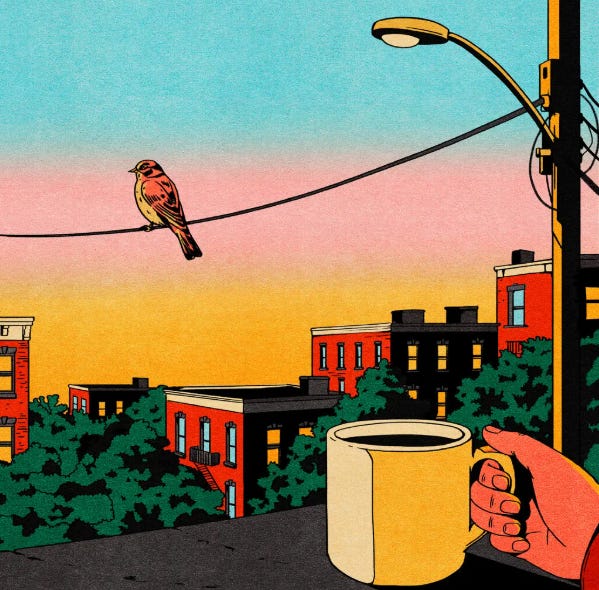
The article explores the tension between cramming one more thing into the day…or choosing a little more space.
I know this battle well. My instinct is often to optimize the minutes (seconds?). To squeeze in one more errand on the way to meet a friend, one more email before a Zoom meeting, or a garden task before leaving for dinner. And then suddenly the “leaving with plenty of time” turns into clenching the steering wheel, biking frantically or rehearsing excuses. Anyone else??
Here’s the paradox: we rush and we also sense that, as Kirsch writes, rushing “is the root of much of the misery of modern life.”
When Everything is Optimized
It’s not our fault: our culture constantly reinforces this tendency. We’re surrounded by the language of “time hacks,” optimization, maximizing productivity, “efficient” morning routines, or “giving back time.”
All of this measures success by one thing: output per time unit. This takes our attention away from the quality of those moments–whether we’re frantic or relaxed–to the metrics of arrival time and tasks-accomplished.
My book grew out of this tension: how often I was optimizing and managing my meetings and happy hours and friend catch-ups and not really being present for any of them. And it’s connected to the question Kirsch raises in the article: “Why does it feel worse to be early than to rush and stress and arrive a little late?”
The Kindness Buffer
My response to Kirsch’s question is that we frame buffer time all wrong. We assume that the point of leaving early is to get there on time. But the real power of buffer, I argue, is to protect our values. This is the heart of Chapter 6 “The Kindness Buffer.”
How many productivity books, youtube videos, and podcasts come with the advice “build in more time than you need.” Yet it doesn’t work. Why?
It’s because from a pure efficiency perspective, arriving early can feel like failure. Sitting awkwardly in the car scrolling your phone, the unfolded laundry and chores waiting for you back at home. It makes sense that we avoid it.
But from a values perspective? Arriving early means you didn’t spend the commute stressed, reactive, or treating the people around you like obstacles. Maybe it means you arrived a bit more like the person you actually want to be, not just the stress-ball version we’re not proud of.
***
The kindness buffer is part of my larger argument in the book: time should be a tool that serves our values, not a master that overrides them.
How we choose to move through time matters deeply. Kirsch’s article shows how hard it is to remember the costs of rushing; my hope is that my book helps us all remember the benefits of risking being a little early.
Are you someone who naturally builds in spaciousness (what I call a buffer jedi in the book)? Or someone who believes you can somehow bend time? 🤦♂️ What have you noticed?
Time bender here! Following your work and hoping to one day be the kind of person who truly slows down.